

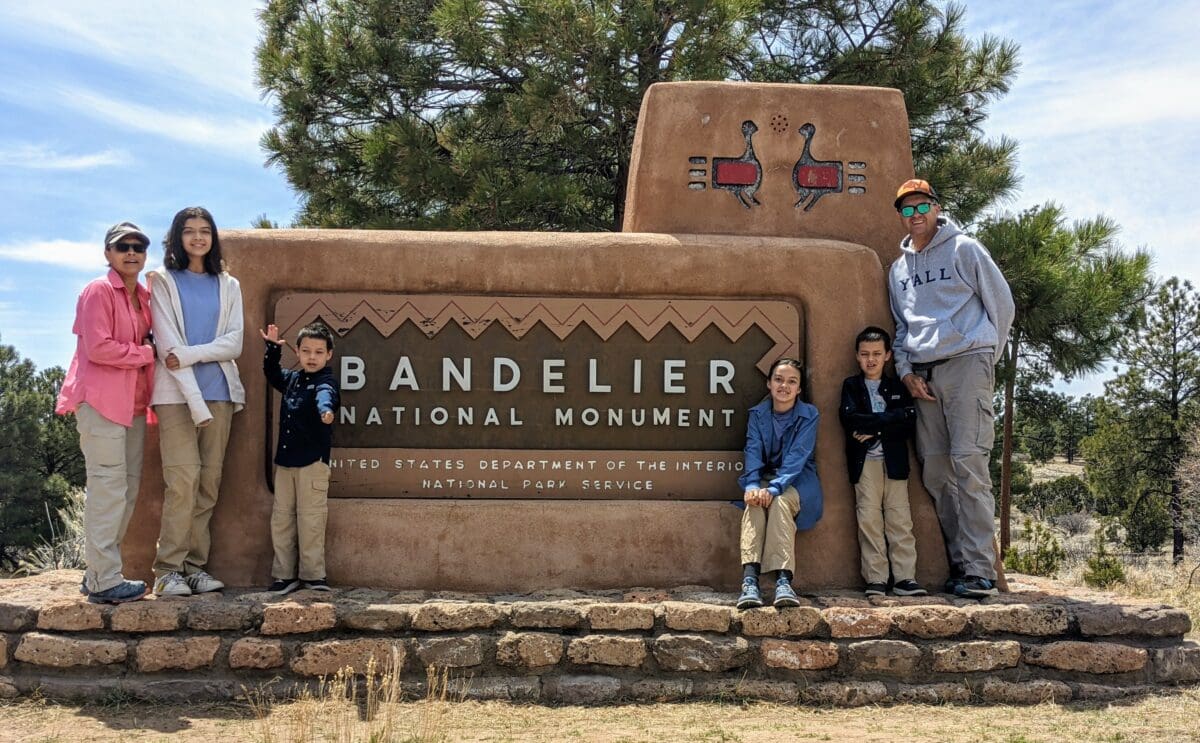
Nestled in the rugged landscapes of New Mexico, Bandelier National Monument offers a captivating glimpse into the lives of the Ancestral Pueblo people. Our family, including our adventurous boys aged 7 and 5, explored this historic gem, climbing ladders and wandering trails to uncover its ancient secrets. From the well-preserved archaeological sites to the breathtaking views of Frijoles Canyon, Bandelier is a must-visit for history buffs and outdoor enthusiasts alike.

A Deep Dive into Bandelier’s History and Significance
Bandelier National Monument, located near Los Alamos, New Mexico, spans over 33,000 acres of mesas, canyons, and archaeological treasures. Established in 1916, the monument protects the homes and cultural sites of the Ancestral Pueblo people, who lived here between 1150 and 1550 CE. These communities thrived in Frijoles Canyon, building homes from volcanic tuff and cultivating crops like corn, beans, and squash. The park’s most iconic features include the cavates—small, human-carved alcoves in the canyon walls—and multi-story stone dwellings like Tyuonyi and Long House.

The Ancestral Puebloans were skilled architects, creating kivas (circular ceremonial spaces) and intricate village layouts that harmonized with the rugged terrain. Their descendants, including the modern Pueblo communities of San Ildefonso and Cochiti, maintain cultural ties to the area. Bandelier also preserves petroglyphs, pottery fragments, and other artifacts, offering a window into a sophisticated society. The park’s museum, located in the visitor center, showcases tools, jewelry, and ceramics, providing context for the lives of these early inhabitants. Beyond its cultural significance, Bandelier’s diverse ecosystem includes piñon-juniper woodlands and wildlife like mule deer and Abert’s squirrels, making it a haven for nature lovers.
Bandelier National Monument: Fees, Hours, and More
Bandelier National Monument is open year-round, with the visitor center operating from 9:00 AM to 5:00 PM daily, though hours may vary seasonally. The entrance fee is $25 per vehicle, valid for seven days, or $15 for individuals on foot or bike. An America the Beautiful Pass ($80 annually) grants access to Bandelier and other national parks. Free admission is offered on select days, such as National Park Service Founders’ Day (August 25). The park requires a free shuttle bus from the White Rock Visitor Center to access Frijoles Canyon between 9:00 AM and 3:00 PM from mid-May to mid-October, though private vehicles are allowed outside these hours. Facilities include restrooms, a gift shop, and a snack bar at the visitor center. Note that pets are not permitted on trails, and sturdy shoes are recommended for ladder climbing and uneven terrain.
Our Family’s Adventure at Bandelier National Monument
Our visit to Bandelier National Monument was a highlight of our New Mexico road trip, filled with hands-on exploration that thrilled our entire family, including our boys, aged 7 and 5. We tackled two main trails, both well-marked and manageable for young adventurers.

The Pueblo Loop Trail, a 1.4-mile round-trip, was our first stop. This easy trail winds through Frijoles Canyon, passing key archaeological sites like the Big Kiva, a large ceremonial space, and Tyuonyi, a circular village once home to hundreds. Our boys were thrilled to climb ladders into the cavates, small alcoves carved into the soft tuff cliffs. These cozy spaces gave us a tangible sense of how families lived centuries ago. The trail also showcased Talus House and Long House, a multi-story dwelling with viga holes still visible in the cliff face. Interpretive signs along the path provided fascinating details, and the boys loved spotting petroglyphs etched into the rock. The trail’s gentle terrain and short length made it perfect for our family, with plenty of shade from ponderosa pines to keep us cool.

Next, we ventured onto the Alcove House Trail, a 2.5-mile out-and-back hike rated as easy but with a thrilling twist. This trail leads to Alcove House, a ceremonial cave perched 140 feet above Frijoles Canyon. Reaching it required climbing four wooden ladders and several stone stairs—a challenge our 5- and 7-year-olds tackled with glee. The view from the top was stunning, overlooking the canyon’s lush floor. Inside Alcove House, we explored a reconstructed kiva and saw viga holes and niches where families once lived. Imagining the effort to haul supplies up those ladders gave us a deep appreciation for the Ancestral Puebloans’ resilience. The trail was busy but not overcrowded, and we enjoyed chatting with other hikers. March to November is ideal for this trail, as winter snow can make ladders slippery. For safety, we ensured the kids stayed close on the ladders and brought plenty of water, as the canyon can get warm.

Both trails were highlights, offering a perfect blend of history, exercise, and adventure. The well-maintained paths and clear signage made navigation a breeze, and the ladder-climbing experience was a unique thrill that even our young boys handled confidently. We recommend bringing snacks, sunscreen, and a camera to capture the stunning views and ancient structures.
A Timeless Adventure Worth Experiencing
Our family had an unforgettable time at Bandelier National Monument, climbing back into history and immersing ourselves in the world of the Ancestral Pueblo people. This special place balances preservation with accessibility, allowing guests of all ages to engage with the past in a hands-on way. From scaling ladders to exploring ancient homes, Bandelier captivated our boys and left us all in awe of its cultural and natural beauty. For more travel inspiration, check out our YouTube channel, where we share highlights from our adventures, or visit our Plan Your Trip page to start planning your own dream trip to Bandelier!
Leave a Reply